
Ramen ORE NO Sora — Tokyo ramen guide
Discover the legendary pork-seafood Shoyu broth at Ramen Ore-no-Sora, a cherished local gem hidden in the back alleys of Toshima, Tokyo.
This page is editorial trip-planning content, not the venue's official site. Always confirm hours, access, menus, and prices on site or via Maps before visiting.
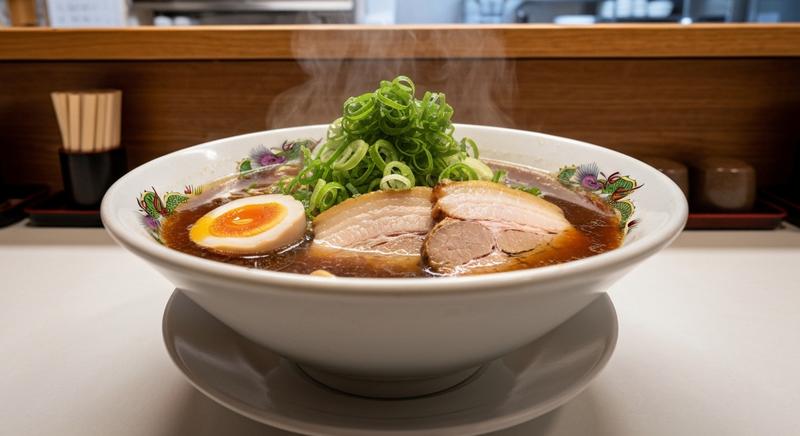
The lead image is an AI-generated illustration and may not show this venue's real interior or offerings.
Quick visit guide
- Style
- Shoyu
- Area
- Tokyo
- What to order
- Classic shoyu ramen; taste the broth first before adding condiments.
- Good for
- Classic ramen fans, travelers who prefer balanced bowls
Before you go
- Confirm hours, holidays, and prices on Google Maps or at the shop before you go.
- Popular shops often queue at lunch and dinner — plan extra time.
- If there is a ticket machine, check whether cash is required.
Background & full notes (expand)
The Soul of the Shop: History and Philosophy.
To understand the culinary tapestry of Tokyo’s Toshima Ward—most notably the sprawling, neon-drenched labyrinth of Ikebukuro—one must understand the brutal, beautiful evolution of its ramen scene. This is not merely a neighborhood of convenience; it is a fiercely competitive colosseum where noodle shops rise and fall like transient dynasties. Amidst this relentless tide of gastronomic trends stands a monument of quiet consistency, a sanctuary revered by local epicureans and culinary purists alike: Ramen Ore-no-Sora (俺の空).
Founded during the golden age of the "W-Soup" (double soup) revolution of the early 2000s, Ramen Ore-no-Sora—which poetically translates to "My Sky"—was established with a singular, uncompromising vision: to capture the vastness, clarity, and depth of the sky within a single, perfect vessel of soup. While commercial ramen giants sought to expand globally, diluting their brand and their broths, the masters at Ore-no-Sora remained rooted in Toshima. They chose the path of the artisan, focusing on micro-adjustments to temperature, sourcing local ingredients with obsessive scrutiny, and catering to a loyal base of neighborhood residents, salarymen, and students from nearby universities.
The philosophy of Ore-no-Sora lies in the delicate equilibrium between tradition and sensory intensity. The kitchen operates not as a fast-food assembly line, but as a culinary laboratory where ancient fermentation techniques meet modern structural gastronomy. The chefs here view Shoyu (soy sauce) ramen not as a simple, comforting classic, but as an infinite canvas for umami synergy. They understand that the local Tokyo palate demands a broth that is at once deeply comforting yet intellectually stimulating—a soup that reveals different layers of flavor with every spoonful, from the first piping-hot sip to the final, cooler dregs at the bottom of the bowl.
This commitment to the local community has earned Ore-no-Sora the coveted status of a true "현지인맛집" (local favorite). It is a place where tourist maps rarely venture, hidden away from the glittering main thoroughfares in a quiet pocket of Toshima. Here, the air is thick with the scent of simmering pork bones and roasted seafood, an olfactory siren song that has beckoned hungry locals for decades. To cross the threshold of Ore-no-Sora is to step out of the frantic pace of modern Tokyo and into a timeless realm dedicated to the pursuit of noodle perfection.
The Broth Analysis: Deep Dive into Ingredients and Complexity.
The broth at Ramen Ore-no-Sora is an absolute masterpiece of chemical harmony and culinary patience, representing the pinnacle of the Shoyu-Gyokai (soy sauce and seafood) style. It is a dense, opaque elixir that defies the traditional categorization of Shoyu ramen as a light, clear soup. Instead, Ore-no-Sora presents a hyper-emulsified, full-bodied broth that carries the luxurious weight of a Tonkotsu (pork bone) soup while retaining the complex, fermented brightness of premium Japanese soy sauce.
To comprehend the depth of this broth, one must dissect its preparation, which is a meticulous multi-day process. The foundation of the soup is a heavily simmered pork-bone broth. The culinary team utilizes premium pork femurs (genkotsu) and spinal bones, which are washed repeatedly to remove any bitter impurities before being subjected to a continuous, rolling boil for over twenty hours. This intense heat and agitation break down the marrow and dissolve the rich collagen into gelatin, yielding a liquid that is remarkably viscous and velvety on the palate.
However, the genius of Ore-no-Sora lies in its revolutionary W-Soup formulation, which blends this unctuous pork foundation with an extraordinarily complex seafood (Gyokai) dashi. This dashi is not a mere afterthought; it is crafted from a curated blend of dried skipjack tuna (katsuobushi), smoked mackerel flakes (sababushi), and high-grade dried baby sardines (niboshi) sourced directly from the pristine coastal waters of Japan. The seafood elements are steeped at a precise, sub-boiling temperature to extract their rich inosinates—the chemical compounds responsible for deep savory flavor—without releasing the bitter, fishy notes that plague lesser broths.
These two distinct liquid elements are then married to the tare (the seasoning base), which is the true heart of this Shoyu masterpiece. The master blender at Ore-no-Sora utilizes a proprietary blend of three distinct soy sauces: a raw, unpasteurized ki-shoyu for its vibrant, lactic acidity; a deeply aged tamari for its dark, molasses-like color and high concentration of glutamates; and a toasted, sweet shoyu to provide a subtle, caramelized finish. This soy sauce blend is matured for weeks with mirin (sweet rice wine) and a touch of sake, allowing the harsh alcoholic edges to mellow into a smooth, deeply complex seasoning agent.
When the broth is assembled, the synergy between the glutamates in the Shoyu tare, the inosinates in the Gyokai dashi, and the guanylates inherent in the pork bone marrow triggers an umami explosion on the human palate. The first spoonful is a sensory revelation. On the tip of the tongue, one experiences the sharp, smoky punch of the dried fish, accented by the salty-sweet complexity of the fermented soy. As the liquid moves across the palate, the gelatinous pork broth coats the mouth, releasing a wave of rich, fatty sweetness that balances the salinity of the seafood. The finish is remarkably clean, leaving a lingering, warm resonance of roasted wheat and sea salt in the throat, free of any cloying greasiness. It is a broth that demands your full, undivided attention, a liquid symphony where every note is played in perfect pitch.
Noodle & Topping Harmony: Texture, Chashu, and Ajitama Analysis.
While the broth is the soul of Ore-no-Sora, the noodles and toppings constitute its physical architecture, meticulously engineered to complement and elevate the soup's intense flavor profile. There is no room for error here; a single discordant element would shatter the delicate equilibrium of the entire bowl.
Let us first examine the noodles, which are custom-crafted daily to the shop's exact specifications. Unlike the thick, wavy noodles often paired with heavy broths, the artisans at Ore-no-Sora have opted for a medium-thin, straight noodle with a relatively low hydration level (around 30-32%). This low hydration is a calculated, brilliant choice. It ensures that the noodles act like natural culinary sponges, absorbing the rich pork-seafood broth through capillary action as they travel from the bowl to the diner’s lips.
The flour blend is a proprietary mixture of domestic Japanese wheat, selected for its high protein content and fragrant aroma. When cooked to a precise katamen (firm) state, these noodles possess an exceptional structural integrity. There is a distinct, satisfying al dente snap at the core of each strand, providing a tactile contrast to the velvety viscosity of the broth. As you chew, the natural sweetness of the wheat is released, mingling with the savory notes of the Shoyu to create a harmonious flavor profile that evolves with every bite.
The toppings at Ore-no-Sora are treated with the same level of reverence as the primary components. The star of the show is the chashu (braised pork), which is presented in two distinct textures: thick-cut slices of rolled pork belly (bara) and delicate, hand-shredded pork (hogushi chashu). The pork belly is slowly simmered in a sweet soy-and-mirin liquor until the intramuscular fat reaches its melting point. When placed in the hot broth, this fat begins to dissolve, adding a rich, buttery layer to the soup. The meat itself is incredibly tender, yielding effortlessly to the gentle pressure of chopsticks.
The shredded hogushi chashu, however, is a stroke of pure culinary genius. These fine threads of savory pork weave themselves between the straight strands of the noodles, ensuring that every mouthful of pasta is accompanied by a burst of intensely seasoned meat texture. It is a brilliant play on mechanics, transforming the act of eating noodles into a multi-layered textural experience.
No review of Ore-no-Sora would be complete without analyzing the ajitama (seasoned soft-boiled egg). The egg is cooked to a state of absolute perfection: the albumen is firm yet tender, stained a light amber from its bath in a soy-based dashi marinade, while the yolk remains in a magnificent, jammy state of semi-suspension. The yolk is rich, custardy, and deeply savory, offering a luxurious, cream-like element that tempers the smoky intensity of the broth when broken.
Finally, the bowl is crowned with a heap of finely shredded negi (Japanese green onions) and a sheet of premium nori (dried seaweed). The green onions are sliced with micro-thin precision, providing a sharp, clean, and slightly spicy crunch that cuts through the rich fat of the pork, cleansing the palate between bites. The nori, sourced for its high mineral content, acts as a bridge between the land and the sea, its crisp texture slowly softening in the broth to release a wave of pure marine aroma. Together, these elements form a cohesive, flawless ensemble cast, with each ingredient performing its role to perfection.
The Experience: Vibe, Wait Time, and Neighborhood Guide.
Dining at Ramen Ore-no-Sora is not merely an act of consumption; it is an immersive cultural ritual that captures the very essence of Tokyo's local food subculture. The shop is situated in a quiet, unassuming alleyway of Toshima, a stark and welcome contrast to the sensory overload of nearby Ikebukuro Station. This transitional journey—from the chaotic, neon-lit grand avenues to the quiet, atmospheric backstreets—serves as the perfect palate cleanser, preparing the diner for the meditative experience that lies ahead.
Upon arrival, the understated exterior of the shop immediately signals its status as a "Local Gem." There are no gaudy signs or flashing lights; instead, a simple, elegant wooden facade and a traditional indigo noren (curtain) bearing the shop's name in minimalist calligraphy greet the visitor. The queue, which forms reliably during lunch and dinner rushes, is composed almost entirely of discerning locals: salarymen in crisp suits looking for a midday refuge, neighborhood retirees who have frequented the shop for decades, and local students seeking a comforting, high-quality meal.
The wait, which can range from twenty to forty-five minutes during peak hours, is handled with quiet, orderly efficiency. Before entering the sanctuary of the shop, diners are directed to the traditional ticket vending machine. This tactile interface, though daunting to some, is a nostalgic and efficient prelude to the meal. With a simple press of a button, your culinary destiny is sealed, and your ticket is handed to the focused, polite staff.
Stepping inside Ore-no-Sora, one is immediately enveloped in a warm, intimate atmosphere. The interior is designed around a sleek, polished wooden L-shaped counter that seats only a dozen fortunate guests. The lighting is low and dramatic, casting a spotlight directly onto the individual prep stations and the bowls of ramen themselves, treating each dish like a precious work of art. The soundtrack is a soothing, low-volume jazz, punctuated only by the rhythmic clanking of noodle strainers, the gentle hiss of boiling water, and the satisfied, collective chorus of slurping from the patrons.
The service is a masterclass in omotenashi (Japanese hospitality)—quiet, observant, and completely unobtrusive. The chefs work with a calm, surgical precision, their movements fluid and highly practiced. There is no shouting or frantic energy; indeed, the atmosphere is almost temple-like, encouraging guests to focus entirely on the sensory experience before them.
After finishing your bowl, take some time to explore the fascinating neighborhood of Toshima. This ward is one of Tokyo's most dynamic and culturally rich districts, offering a perfect blend of modern entertainment and historical charm. Just a short walk from the shop, you can lose yourself in the sprawling shopping complexes of Ikebukuro, visit the towering Sunshine 60 for a breathtaking panoramic view of the Tokyo skyline, or explore the quiet, traditional temples of Zoshigaya.
For the culinary traveler, Toshima represents the beating heart of Tokyo's everyday food culture. It is a place where you can witness the authentic, unvarnished lifestyle of Tokyoites, away from the curated tourist corridors of Shibuya or Ginza. And at the center of this vibrant culinary landscape, shining like a guiding star in the night sky, is Ramen Ore-no-Sora—a testament to the power of dedication, craftsmanship, and the eternal pursuit of the perfect bowl of ramen.