The Alchemist’s Cauldron: Why Aji no Kura is the Best Ramen in Fukuoka, Hakata for True Connoisseurs

📍 Fukuoka, Hakata | 🏷️ Tonkotsu, Local Gem | 📅 2026-04-12
Ramen at The Alchemist’s Cauldron: Why Aji no Kura is the Best Ramen in Fukuoka, Hakata for True Connoisseurs in Fukuoka, Hakata

The Soul of the Shop: History and Philosophy.

To understand Aji no Kura is to understand the heartbeat of Hakata itself. In the competitive landscape of Fukuoka, where ramen shops are as ubiquitous as convenience stores, standing out requires more than just a good recipe; it requires a philosophy that borders on the religious. Aji no Kura, which translates roughly to 'The Storehouse of Flavor,' operates on the principle that ramen is not merely fast food, but a historical document of the region.

The shop was founded on the singular mission of preserving the 'Local Gem' status while pushing the boundaries of what a traditional Tonkotsu can achieve. While many modern chains have opted for mass production and diluted flavors to appeal to a global palate, Aji no Kura remains fiercely loyal to the artisanal methods of the past. The philosophy here is one of 'time and temperature.' The masters believe that the soul of the pig cannot be rushed; it must be coaxed out through hours of patient simmering, a process that reflects the hardworking spirit of the Hakata people.

Entering Aji no Kura feels like stepping into a sanctuary. There is a palpable sense of respect for the ingredients. The chefs move with a choreographed precision, their movements honed by years of repetition. They view the ramen bowl as a canvas, where the balance of fat, salt, protein, and spice creates a masterpiece of edible art. This isn't just about feeding people; it's about providing a moment of profound connection to the earth and the culture of Kyushu. It is this dedication to the 'craft of the storehouse' that has earned them a cult following among locals and the few lucky travelers who stumble upon this bastion of authenticity.

The Broth Analysis: Deep dive into ingredients and complexity.

The broth at Aji no Kura is not simply a liquid; it is a multi-layered emulsion that challenges the very definition of 'soup.' To achieve this level of excellence, the kitchen utilizes a grueling 24-hour boiling process, employing the 'Yobimodo' or 'calling back' method. This involves keeping a portion of the previous day’s broth—a 'master stock' of sorts—and introducing it to the fresh batch. This technique creates a depth of flavor that is impossible to replicate in a single session, resulting in a complex profile that carries the echoes of a thousand bowls.

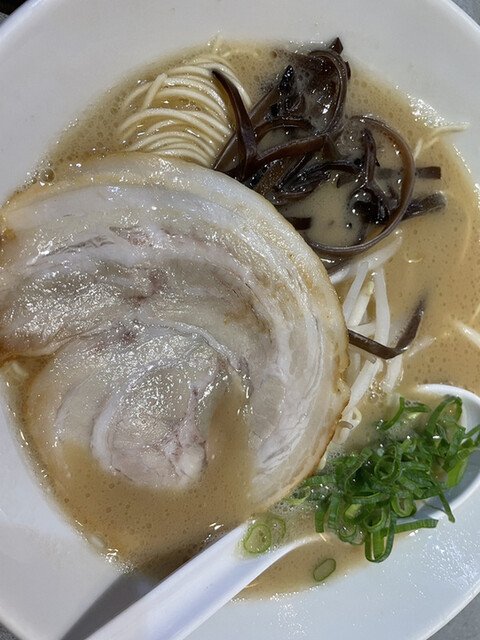
Upon the first spoonful, the diner is greeted by a velvety, opaque liquid that possesses a staggering viscosity. This richness comes from the high-pressure extraction of collagen and marrow from premium pork bones, specifically the cranium and femurs, which provide the cleanest, most intense pork essence. The color is a beautiful, milky ivory, a visual testament to the purity of the fat emulsification. Unlike lesser tonkotsu shops where the fat can feel heavy or greasy on the tongue, Aji no Kura’s broth has a miraculous lightness to its finish, a hallmark of superior filtration and temperature control.

But the true genius of Aji no Kura lies in their '매운맛' (Spicy Flavor) profile. This is not the blunt, one-dimensional heat found in inferior spicy ramens. Instead, it is a sophisticated, tiered heat. The spice is introduced through a house-made 'Kumi-abura' (infused oil) and a secret spice paste that includes toasted chilies, fermented bean paste, and a hint of seafood umami. When swirled into the white tonkotsu base, it creates a stunning marbled effect. The spice acts as a counterpoint to the sweetness of the pork, cutting through the richness and awakening the palate. It begins with a slow, floral warmth on the tip of the tongue, evolves into a smoky mid-note, and finishes with a clean, lingering tingle that invites the next sip.

The complexity is further enhanced by the inclusion of 'Motodare' (the base seasoning sauce). Aji no Kura uses a proprietary blend of locally brewed soy sauces and aged sea salt from the Genkai Sea. This seasoning adds the necessary salinity to highlight the pork’s natural sweetness without overshadowing it. There is a hidden layer of 'Koku'—a Japanese term for depth and body—that suggests the inclusion of dried mushrooms or perhaps a hint of charred garlic, providing a subterranean earthiness that grounds the entire experience. To drink this broth is to experience a symphony where every instrument is perfectly tuned; the fat provides the bass, the spice provides the melody, and the pork essence is the soul-stirring conductor.

Noodle & Topping Harmony: Texture, Chashu, and Ajitama analysis.

The architecture of a great ramen bowl is built upon the relationship between the broth and the noodles. At Aji no Kura, they utilize the classic Hakata-style 'Gokuboso' (ultra-thin) straight noodles. These noodles are crafted with a low water-to-flour ratio, which allows them to act like a wick, drawing the rich tonkotsu broth into every fiber. I highly recommend ordering them 'Barikata' (very firm). This texture provides a necessary resistance, a snap that punctuates the creaminess of the soup. As the noodles sit in the broth, they soften slightly, evolving in texture from the first bite to the last, ensuring that the meal never becomes monotonous.

The Chashu at Aji no Kura is a revelation. They utilize high-quality pork belly, braised for hours in a sweet-savory liquid until the fat reaches a state of near-liquefaction while the meat remains tender and succulent. Before serving, each slice is lightly torched or 'Aburi-ed.' This introduces a whisper of smoke and a caramelized crust that adds another dimension to the bowl. The fat on the chashu mirrors the fat in the broth, creating a seamless transition of flavor.

The 'Ajitama' (marinated soft-boiled egg) is a masterclass in precision. The white is firm enough to hold its shape but yields effortlessly to the chopstick, revealing a molten, jam-like yolk. The yolk has been infused with a soy and mirin marinade, giving it a deep orange hue and a concentrated savory-sweet profile. When the yolk mingles with the spicy tonkotsu broth, it creates a third, even creamier flavor profile that is nothing short of decadent.

Additional toppings include the essential 'Kikurage' (wood-ear mushrooms), which provide a crunchy, earthy contrast to the soft noodles, and a generous heap of fresh 'Negi' (green onions) which offer a sharp, pungent bite to cleanse the palate between sips. The inclusion of 'Karashi Takana' (spicy pickled mustard greens) on the side is a nod to local Fukuoka traditions. Adding a pinch of these greens halfway through the meal introduces a fermented tang and an extra kick of spice, effectively transforming the bowl into a new experience mid-way through the meal.

The Experience: Vibe, wait time, and neighborhood guide.

Eating at Aji no Kura is an exercise in local immersion. Located away from the glossy, tourist-heavy corridors of the central Hakata Station, the shop maintains an air of 'if you know, you know.' The exterior is unassuming, often marked only by a simple noren curtain and the intoxicating aroma of boiling pork bones that wafts down the street. It is a 'Local Gem' in the truest sense—a place where salarymen, construction workers, and food obsessives rub shoulders at a cramped but cozy wooden counter.

The vibe is one of focused energy. This is a 'Solo Friendly' environment where the primary conversation is between the diner and the bowl. The sounds of high-heat burners and the rhythmic 'thwack' of noodles being drained of water provide the soundtrack. It is a rustic, minimalist space—dark wood, warm lighting, and the occasional hiss of steam. There is no pretension here; the focus is entirely on the quality of the food.

Wait times can vary. During the peak lunch hour (12:00 PM – 1:30 PM), expect a queue of locals. However, the service is incredibly efficient. In Hakata, ramen is eaten quickly, and the turnover is fast. If you arrive slightly before the lunch rush or during the mid-afternoon lull, you can often secure a seat immediately. The staff are masters of hospitality, welcoming you with a vigorous 'Irasshaimase!' that makes you feel like an honored guest in their culinary home.

After your meal, take a stroll through the surrounding neighborhood of Hakata. This area is the historical heart of Fukuoka, filled with hidden shrines, traditional craft shops, and the famous Kushida Shrine just a short distance away. Walking through these streets with the lingering warmth of Aji no Kura’s spicy tonkotsu in your belly is one of the great pleasures of visiting Fukuoka. It is a reminder that the best meals are not just about the food itself, but the place, the people, and the centuries of tradition that brought that bowl to your table. Aji no Kura isn't just a ramen shop; it is a gateway to the very essence of Kyushu. For the discerning critic, it is an essential pilgrimage, a 5-star experience hidden in plain sight.

🗺️ Back to Ramen Map